Showing posts with label Trading Plan. Show all posts

Monday, December 5, 2016

Trading Methods, Systems, and Plans

trading-methods-plans
Do You Know the Difference Between Trading Methods, Systems, and Plans?
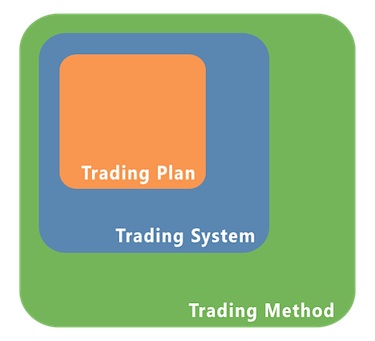
There are significant differences between trading methods, trading systems, and trading plans. These variations can be confusing for new traders, but it is important that students of the market understand and develop these areas in order to optimize their chance of success.
Trading Method
A trading method is the overall process and trading style that is used to profit from the markets. A trading method can be defined as principles used to successfully trade in the stock market, options, forex, futures, or bonds. These operating principles are based on the belief of long term profitability and increased value of trading capital. Traders using different systems and different plans can use the same methodology. Methodology is based on the specific style of trading, with some examples being:
  • Technical Analysis
  • Trend Following
  • Value Investing
  • Momentum Trading
  • Growth Investing
  • Swing Trading
Trading System
A trading system is a set of rules that quantifies buy and sell signals, as demonstrated by successful testing on price history or chart studies. A trading system is the specific kind of data or knowledge used to execute the trading method, based on price action or fundamental valuations. These signals are triggered by measurable technical indicators or key levels on charts. Trading systems have specific parameters relating to position sizing that manage risk and increase the probability of profitability over time. A trading system has at least eight quantifiable elements:
  1. Entry signal
  2. Exit signal
  3. Winning percentage
  4. Risk to reward ratio
  5. Position sizing parameters
  6. Frequency of trading opportunities
  7. Average expected annual return
  8. Maximum expected drawdown
Trading Plan
A trading plan is a set of rules, consistent with a trader’s chosen methodology and system that govern how trades will be executed in real-time. These rules determine what will happen based on the trading system’s entries and exits, risk management, and psychology. The trading plan is meant to keep the trader disciplined and safe from their own weaknesses, while providing the parameters for consistent profitability.
Understanding the difference between methodology, system, and plan is essential to organizing and implementing trades at the right levels. As traders turn research into beliefs, trading methods will become their religion, trading systems will become their bible, and their trading plan will allow them to walk in faith every day.

Tuesday, September 13, 2016

7 Good Ways To Exit a Trade

In trading, the money is not made in the entry, it is in the exit. The art of the exit is crucial to a trader’s success in the markets. Profits can disappear if you do not take them at the right time, and small losses can become huge losses if you do not cut them short. Small profits can become huge profits if you let them run until they truly stop moving in your favor. Keeping capital tied up in a trade going nowhere can cause you to miss out on other great opportunities.
So what is a trader to do?
  1. Use stop losses. Only risk losing 1% of your total trading capital on any one trade through the placement of stops and position sizing, and when you have lost that 1%, get out. Position sizing, stop losses, and understanding volatility is the key to proper risk management.
  2. Enter trades at break out points to new highs, off key price support levels, or key moving average support levels. If it loses that support later and fails to retake it, then sell it.
  3. Buy when a stock is one ‘R’ multiple above a key support level, and sell if it falls back and loses that support level. (One ‘R’ multiple = 1% of total trading capital).
  4. Use a ‘stale’ or ‘time’ stop: Set a time limit on how long you will give a trade to move a certain amount, if it fails to move enough fast enough, get out.
  5. Volatility stop: Stop out if the market or your stock has a big expansion in its daily price range, or starts moving against you the full daily range. You either cut your position down in size, or get out due to increased risk based on volatility expansion.
  6. Trail a stop loss behind your winner. When it reverses and hits that stop, you sell. A trailing stop can be a moving average or a percentage you your gain.
  7. Sell your position because you have found a much better trade with a better probability of success, or a bigger upside.
The key is to always have a plan to get out of every trade before you get in. Before each trading day begins, think about what you will do based on where your trade is at, and where it may go.

Friday, August 5, 2016

Ten Questions to ask Yourself Before Every Trade


If you are just randomly trading what you like with no real underlying system, method or planning then unfortunately your odds of success in the long term are slim. Trading a winning methodology is what creates an edge in trading.
Consistently trading a robust system or methodology enables you to trade in a way that historically wins, controls risk, and does not bring your ego and your emotions into your trading in a destructive way.
Ten questions to ask yourself before every trade:
  1. Does this trade fit my chosen trading style? Whether it is:  swing trading, momentum, break out, trend following, reversion to the mean, or day trading?
  2. How big of a position do I want to trade? How much capital am I going to risk? Am I limiting my risk to 1% or 2% of my trading capital?
  3. What is my risk of ruin based on my capital at risk?
  4. Why am I entering the trade here? What is the trigger to trade?
  5. How will I exit with a profit? A price target or trailing stop?
  6. At what price will I know that I was wrong? Where is my stop loss based on the position size?
  7. Will I be able to admit I was wrong and exit the trade if my stop is hit, or will my ego make me hold and hope?
  8. Is the risk small enough that I can emotionally handle the loss without blaming the market?
  9. Can I really risk this money or do I need it for upcoming bills? Trade with risk capital not living expenses.
  10. Am I committed to staying disciplined and following my trading plan on the trade?
I believe the answers to these questions will determine your success in any trade more than anything else.
यदि आप असली आधारभूत तंत्र, विधि या योजना को पसंद ना करके आप सिर्फ बेतरतीब ढंग से कारोबार कर रहे हैं तो दुर्भाग्य से आपकी सफलता के सुअवसर लंबे समय के लिए दुर्बल हैं।
ट्रेडिंग के लिए "एक जीतने वाली कार्यप्रणाली ट्रेडिंग" एक असाधारण धार बनाता है। 
एक मजबूत तंत्र या कार्यप्रणाली युक्त लगातार ट्रेडिंग आपको व्यापार करने के लिए ऐतिहासिक जीत के मार्ग पर जोखिम को नियंत्रित करने योग्य बनाता है और आपके ट्रेडिंग के विनाशकारी मार्ग पर आपका अहंकार व आपकी भावनाएँ नहीं आती है।
दस सवाल हर व्यापार से पहले खुद से पूछे:
1 यह ट्रेड मेरी चुनी हुई ट्रेडिंग शैली के लिए योग्य क्यों है। इनमें से कौन सा है: दोलन ट्रेडिंग (swing trading), वेग (momentum), चलन से बाहर (break out), पूर्व प्रवृत्ति का पालन (trend following), माध्य में लौटना (reversion to the mean) या दिन का कारोबार (day trading)?
2 मैं किस तरह लॉट को बड़ा करके ट्रेड करना चाहता हूँ? मैं जोखिम के लिए कितनी पूंजी लेने जा रहा हूँ? क्या मैं अपने जोखिम को अपनी ट्रेडिंग पूंजी का 1% या 2% सीमित कर रहा हूँ?
3 अपनी पूंजी को जोखिम से बचाने के लिए बर्बाद करने को मेरे जोखिम क्या है
4 मैं यहाँ क्यों ट्रेड के लिए प्रवेश कर रहा हूँ? ट्रेड करने के लिए ट्रिगर क्या है?
5 मैं लाभ के साथ कैसे बाहर निकलूँगा? A price target or trailing stop?
6 किस कीमत पर मैं समझूँगा हूँ कि मैं गलत था? लॉट आकार के आधार पर हानि बंद (Stop Loss) कहाँ है?
7 क्या मेरे गलत होने पर यदि मेरा बंद आ जाए या मेरा अहंकार मुझे पकड़े और आशा देने लगे तो मैं ट्रेड से बाहर निकलने को स्वीकार करने में समर्थ जाऊगाँ?
8 क्या जोखिम काफी छोटा है तो उसे मैं बाजार को दोष देने के बग़ैर हानि को भावनात्मक रूप से संभाल सकता हूँ?
9 क्या मैं वास्तव में इस पैसे का जोखिम ले सकता हूँ या मुझे आने वाले बिलों के लिए इसकी जरूरत है? जोखिम वाली पूंजी के साथ ट्रेड करो जीवित रहने के खर्चो के लिए नहीं
10 क्या मैं अनुशासित रहने के लिए प्रतिबद्ध हूँ और ट्रेड के लिए ट्रेड योजना को अनुसरण करनेवाला हूँ?
मेरा मानना है कि ओर सभी से ज्यादा इन सवालों के जवाब किसी भी ट्रेड में आपकी सफलता का निर्धारण करेगें

Friday, May 6, 2016

10 Steps to Successful Trading

One trade is meaningless outside a trading system. A trading system can not be implemented without a trading plan. Entries are just the beginning; the exit is what determines if a trade is profitable or not.
Here is the structure all traders need for long term success:
  1. We have to create a trading system that back tests show would have been profitable.
  2. We then create a trading plan that shows how to execute our trading system with real money.
  3. You need quantified entry signals to tell you when the risk/reward is in your favor.
  4. Position sizing has to be determined based on volatility.
  5. The risk of ruin has to be eliminated or you will eventually blow up your trading capital.
  6. A trader needs to trade primarily in the direction of the trend in their time frame.
  7. We must have a price level that will tell us when were wrong about a trade and need to exit with a small loss.
  8. We need exit signals to tell us when to exit and lock in profits when we are right.
  9. We must have trading rules that override our fear, greed, and ego.
  10. We must have the discipline to follow our trading rules no matter how we feel.

13 Things Successful Traders Do Differently

  1. They pursue realistic goals as their returns.
  2. They take decisive and immediate action when their buy or sell signal is hit.
  3. They focus on winning trades and not quantity of trades.
  4. They make logical, informed trading decisions within their system, based on the probabilities.
  5. They avoid the trap of trying to make perfect trades, and instead focus on being profitable in the long term.
  6. They trade the right position size that is within their comfort zone.
  7. They keep things simple and focus on winning trades, not complexity in their trading.
  8. They focus on learning and making small continuous improvements in their trading system.
  9. They measure and track their progress with a trading journal.
  10. They maintain a positive outlook as they learn from their mistakes, and focus on trading with discipline.
  11. They spend time learning from better traders.
  12. They maintain balance in their life by spending time with family and friends.
  13. They love what they do and their passion keeps them going through the rough times.

Monday, April 11, 2016

A Trading Plan: Do You Have One?

Successful traders have a plan to win. By carefully putting the odds in their favor for the long term, successful traders will overtake gamblers who rely on random trades and a prayer.
If you want to win in any area of life, you must be disciplined, study, and do the hard work. There are no short cuts, and especially not in trading. You need to enter the markets prepared and with a detailed plan to enable success. Here are the components of a trading plan:
The Components of a trading plan:
1. Entering a trade: You must know clearly at what price you plan to enter your trade. Will it be a break through resistance, a bounce off support, or a specific price, or based on indicators? You need to be specific.
2. Exiting a trade: At what level will you know you are wrong? Loss of support, a price level, a trailing stop, or a stop loss? Know where you are getting out before you get in.
3. Stop placement: You must either have a mental stop, a stop loss entered, a time stop alone, or a time stop with an indicator.
4. Position sizing: You determine how much you are willing to risk on any one trade before you decide how many shares to trade. How much you can risk will determine how much you can buy, based on the equities price and volatility.
5. Money management parameters: Never risk more than 1% of your total capital on any one trade. (2% maximum for aggressive traders who can handle bigger drawdowns.)
6. What to trade: Trade things you are comfortable with. Swing trading range bound stocks, trend trading growth stocks, or trend following commodities or currencies. Trade what you know.
7. Trading time frames: Are you a day trader, position trader, swing trader, or long term trend follower? If you are a long term trend follower, don’t get shaken out of a position in the first day by taking profits or getting scared. Know your holding period and adjust your plan accordingly.
8. Backtesting: Do not trade any method until you reviewed charts over a few years to see how you would have done. Alternatively, utilize backtesting software to analyze historical data for your system. There are also precooked systems like CAN SLIM, The Turtles Trading System, and many Trend Following Systems. You need to begin trading knowing you have an edge.
9. Performance review: Keep a detailed record of your wins and losses. You need to be sure that your method is working in real trading. Review this after every 20 trades. Also, if you had any issues with discipline, then make notes, learn from your mistakes, and the make necessary adjustments.
10. Risk vs. Reward: Enter high probability trades where you are risking $1 to make $3, or trade a system that wins big in the long term through trend following.
Regardless of how you trade, every trader must have a trading plan. Period.

How to be a Profitable Trader in 180 Days

This is a guest post by Rayner Teo
how to be a profitable trader
Let me guess.
You’re into trading because you want financial freedom, to make lots of money, and to kiss your boss’s as* goodbye.
You learn everything you can get your hands on. Trading books, courses, forums etc.
1 year has passed…
2 years has passed…
3 years has passed…
And you’re still not profitable.
The bad news is this:
Chances are, you don’t know what it takes, to succeed in this business.
And the good news?
I’m going to show you how to be profitable, step by step, within the next 180 days.
Let’s begin.

The law of large number and how it impacts your trading

First, you need to understand something called “the law of large number”.
So, what is the law of larger number?
The law of large numbers is a theorem that describes the result of performing the same experiment a large number of times. According to the law, the average of the results obtained from a large number of trials should be close to the expected value, and will tend to become closer as more trials are performed. – Probability Theory
And what does it mean?
This means you need a large number of trades (at least a 100) for your “edge” to play out.
It’s impossible to be consistently profitable every week, taking 7 trades a month.
Because your trading results are random in the short run, and will be closer to its expected value, in the long run.

What is consistency?

Now…
For your “edge” to play out, you need a minimum of 100 trades, for the law of large number to work in your favor.
This means:
If you want to be profitable every day, you need 100 trades a day.
If you want to be profitable every week, you need 100 trades a week.
If you want to be profitable every month, you need 100 trades a month.
So…
Let’s breakdown some of the trading approach you can employ.
High frequency trading – Trading at 10,000 times a day, you can expect to be profitable everyday, like Virtu Financial.
Day trading – Trading an average of 3 – 5 times a day, you can expect to be profitable in most quarters.
Swing/position trading – Trading an average of 5 – 15 times a month, you can expect to be profitable in most years.
The more trades you put on during a shorter period of time, the faster your “edge” will play out.
But without an “edge” in the markets, the more trades you put on, will lead you to blow up your account faster.
Understand this, and you’re ahead of 90% of traders out there.
Next…
I will share with you the exact steps on how to be consistently profitable.

Find a trading style that suits you

The best way to find out is, to read Market Wizards, by Jack Schwager.
You’ll be exposed to different trading styles by successful traders, and learn the essentials of what it takes to be a, consistently profitable trader.
Once you find a trading style that resonates with you, go all out and learn everything you can on it. (Let’s assume you want to be a successful swing trader).
Here’s how:
Books – Go to Amazon, and read books on “Swing trading”. I would suggest sticking to books with 4 stars or higher
Youtube – Watch videos on swing trading, and look for channels to subscribe to
Google – You can always find hidden gems here. Search for topics on “swing trading” and you’ll be amazed at the wealth of information available
Social Media – A gold mine here to learn from experienced traders
As you acquire trading knowledge, I would encourage you to write it down, or save it in a word document. This is to track what you’ve learnt, and to find out “the stuff” that resonates with you.
This should take you no more than 28 days.
Now…
You’re going to use these new found knowledge, and develop your own trading plan.
Are you ready?

A step by step guide to developing your trading plan

A trading plan is a set of guidelines that define your trading.
The benefits of a trading plan:
  • Removes subjectivity in your trading
  • Reduce “roller coaster” experiences
  • Keeps you focus on your trading goals
  • Allows you to identify “problems” to work on
  • Prepares you for the “worst” possible scenario
Now you’re probably wondering:
How do I develop a trading plan?
By answering these 7 questions…
What is your time frame?You must define the time frames you’re trading. If you’re a swing trader, then you’ll probably be trading the 4 hour or daily time frames.
What markets are you trading?You need to state which markets you’ll be trading. It could be equities, forex, futures etc.
How much are you risking on each trade?This boils down to risk management. You must know how much you’re prepared to lose on a single trade. For starters, I would suggest no more than 1%. This means if you have a $10,000 account, you cannot lose more than $100 on each trade.
What are the conditions of your trading setup?You need to know the requirements of your trading setup. Whether you’ll trade with the trend, within a range, or both (For starters I would suggest trading with the trend).
How will you enter your trade?You could enter on a pullback or breakout. Will it be a limit, stop or market order?
Where is your stop loss?
No professional trader would enter a trade without a stop loss. The first thing you need to ask yourself is, “where will I get out if I’m wrong?”
Where is your profit target?
And if price moves in your favor, you need to know where to take your profits.
Disclaimer: Below is a sample trading plan that I came up with randomly, please do your own due diligence.
Sample trading plan
I’ll be using the IF-THEN syntax in my trading plan.
Example:
If I’m a boy, then I’ll wear pants.
If I’m a girl, then I’ll wear skirt.
If I’m not a boy or a girl, then I’ll be naked.
You get my point.
Let’s begin…
If I am trading, then I will only trade Eurusd and Audusd. (The markets you are trading)
If I’m trading currencies, then I’ll focus on the daily charts (Time frame traded)
If I place a trade, then I will not lose more than 1% of my account. (Your risk management)
If price is above 200 EMA on daily, then the trend is bullish. (Conditions before entering a trade and time frame you are trading)
If trend is bullish, then identify area of support where price could retrace to. (Conditions before entering a trade)
If price retrace to your area of support, then wait for a higher close. (Conditions before entering a trade)
If price closes higher, then enter long at next candle open. (Entry)
If you’re long, then place your stop loss below the low of the candle, and take profit at swing high. (Exit when you’re wrong, and when you’re right)
Developing your trading plan should take you not more than 2 days.

Execute your trading plan to be a consistent trader

Once you’ve completed your trading plan, its time to take it to the markets.
I would suggest starting really small on a live account because you’re going to suck, real bad.
And if that’s the case, why not pay lesser in “tuition fees”, to Mr Market?
Now…
When you execute your trades, 1 of 5 things can happen.
  1. Break even
  2. A small win
  3. A big win
  4. A small loss
  5. A big loss
If you eliminate #5, you are much closer to being a profitable trader.
Now…
You must execute your trades consistently according to your trading plan.
Because if you’re entering trades based on how you feel, instead of following your plan, then it would be impossible to tell whether your trading has an “edge” in the markets.
Secondly…
You cannot change your trading plan after a few losing trades. Even though I know you’re tempted to do so.
Why?
Because in the short run, your trading results are random. And in the long run, it’ll be closer towards its expected value.
This means you need a minimum of 100 trades, before coming up with a conclusion whether your trading plan works, or not. Recall the law of large number?
You should be able to execute 100 trades within the next 150 days.
Focus on whether what you are dong is right, not on the random nature of any single trade’s outcome. – Richard Dennis

Record your trades and improve your trading performance

Simply executing your trades isn’t enough.
Because the only metric you get, is your P&L. This doesn’t help improve your trading, except knowing whether you’re making money, or not.
Here’s the metrics you should record:
Date – Date you entered your trade
Time Frame – Time frame you entered on
Setup – Trading setup that trigger your entry
Market – Markets you’re trading
Lot size – Size of your position
Long/Short – Direction of your trade
Tick value – Value per tick
Price in – Price you entered
Price out – Price you exited
Stop loss – Price where you’ll exit when you’re wrong
Profit & Loss in $ – Profit or loss from this trade
Initial risk in $ – Nominal amount you’re risking
R – Your initial risk on the trade, in terms of R. If you made two times your risk, you made 2R.
An example below:
stats

Screen capture your charts

After recording down your metrics, you’d want to save your charts for future reference.
Here’s how you can do it:
  1. Save the chart of the higher time frame
  2. Save the chart that you entered on
  3. Save the chart after the trade is completed

Chart of the higher time frame

This chart will give you the big picture of what’s happening. Depending on your trading style, this chart is usually one time frame above your entry time frame.
E.g. If you’re entering off daily charts, then the higher time frame would be weekly.
In this section, write down your thoughts on the higher time frame like:
  • What’s the trend
  • Support & resistance
  • Structure of the markets
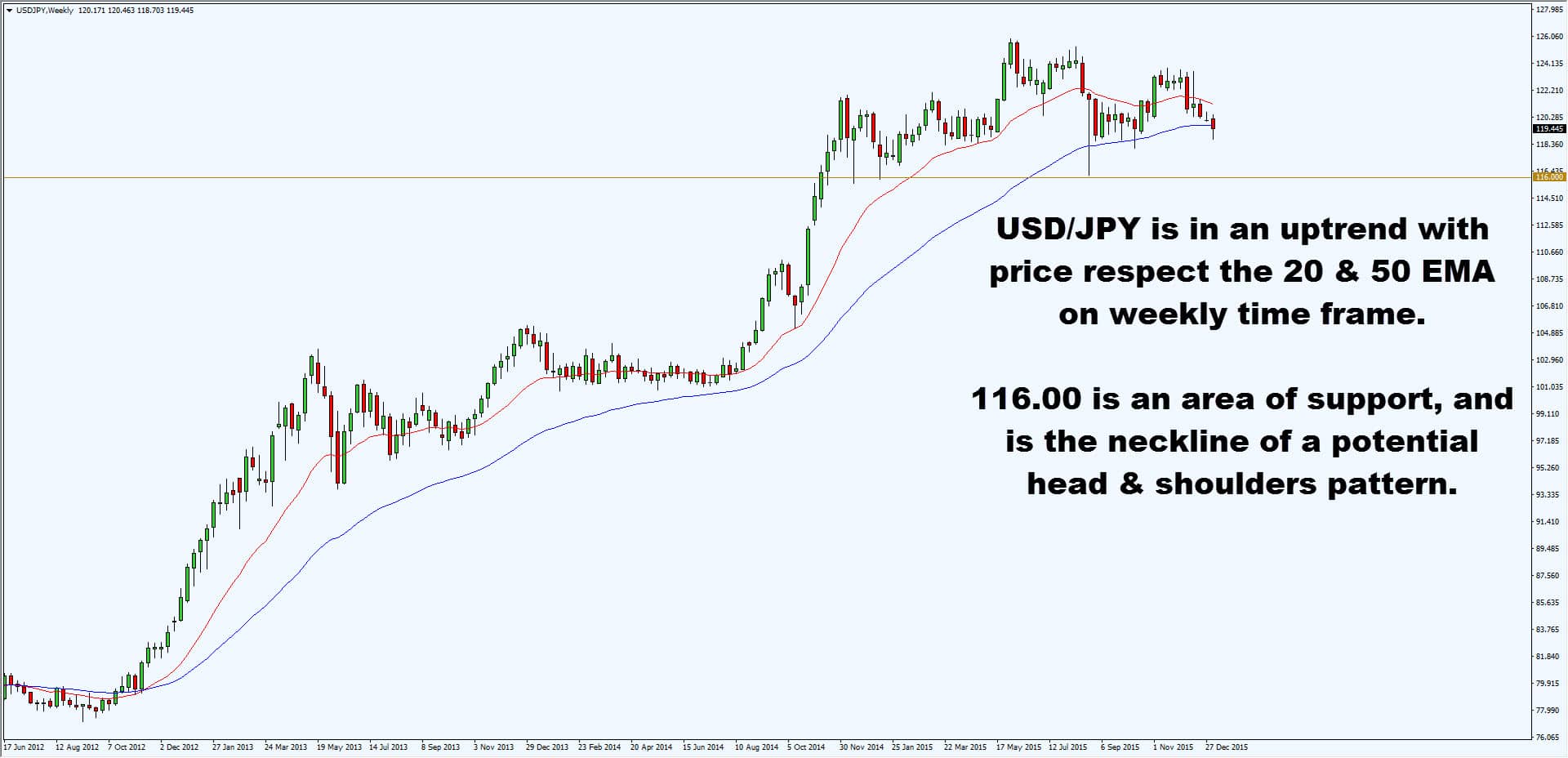
Here’s an example:
higher time frame chart

Chart of the entry time frame

This chart is the time frame you entered on. You’ll mark out the entry and stop loss of your trade.
In this section, write down your thoughts like:
  • What’s the setup
  • Where’s your entry
  • Where is your stop loss
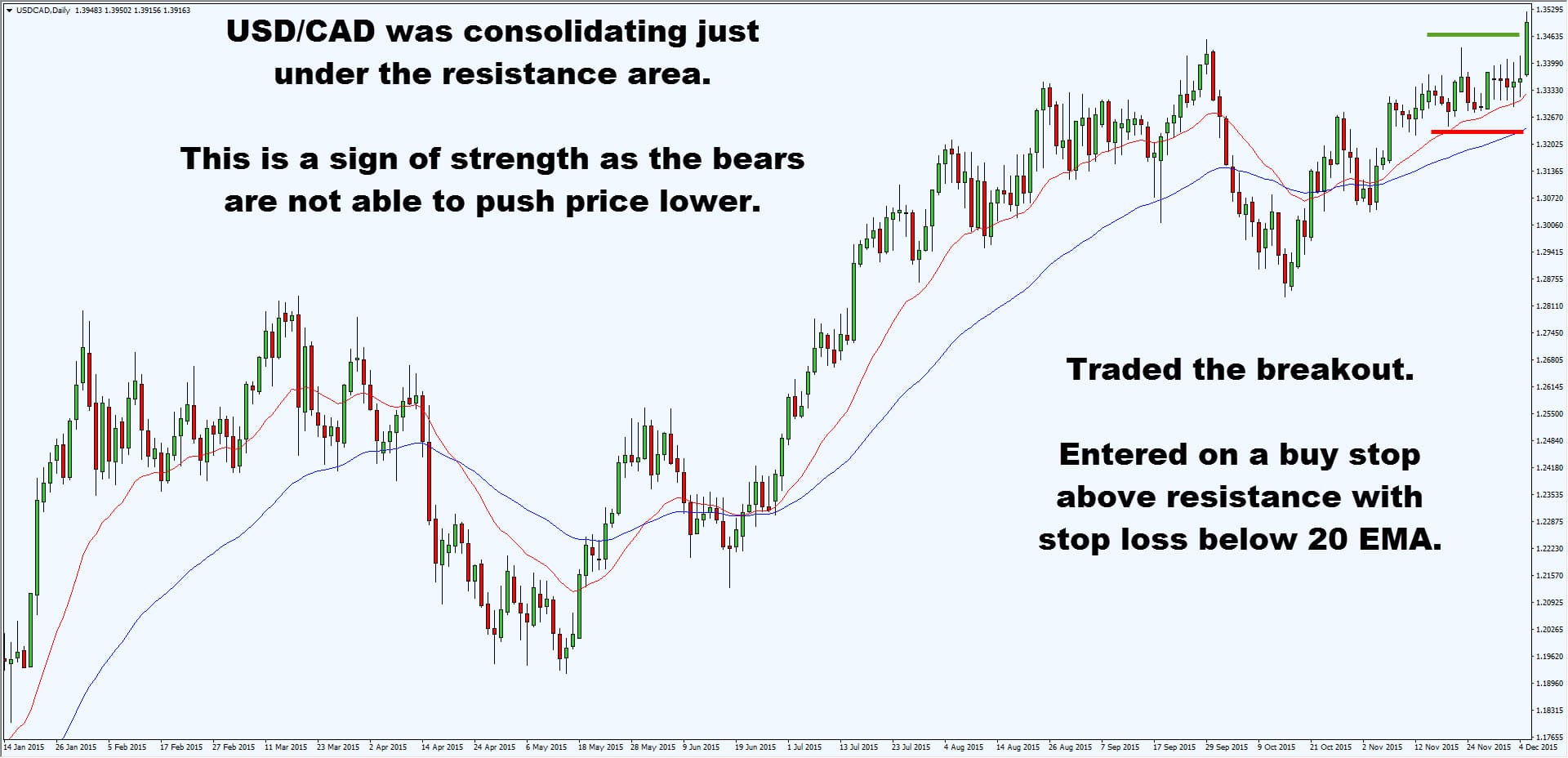
Here’s an example:
entry time frame

Chart after the trade is completed

After completing a trade, you’ll save the chart with your thoughts on it.
In this section, write down your thoughts like:
  • Did you follow your plan
  • What’s your profit/loss in R
  • How did you exit your trade
  • How could you improve on it
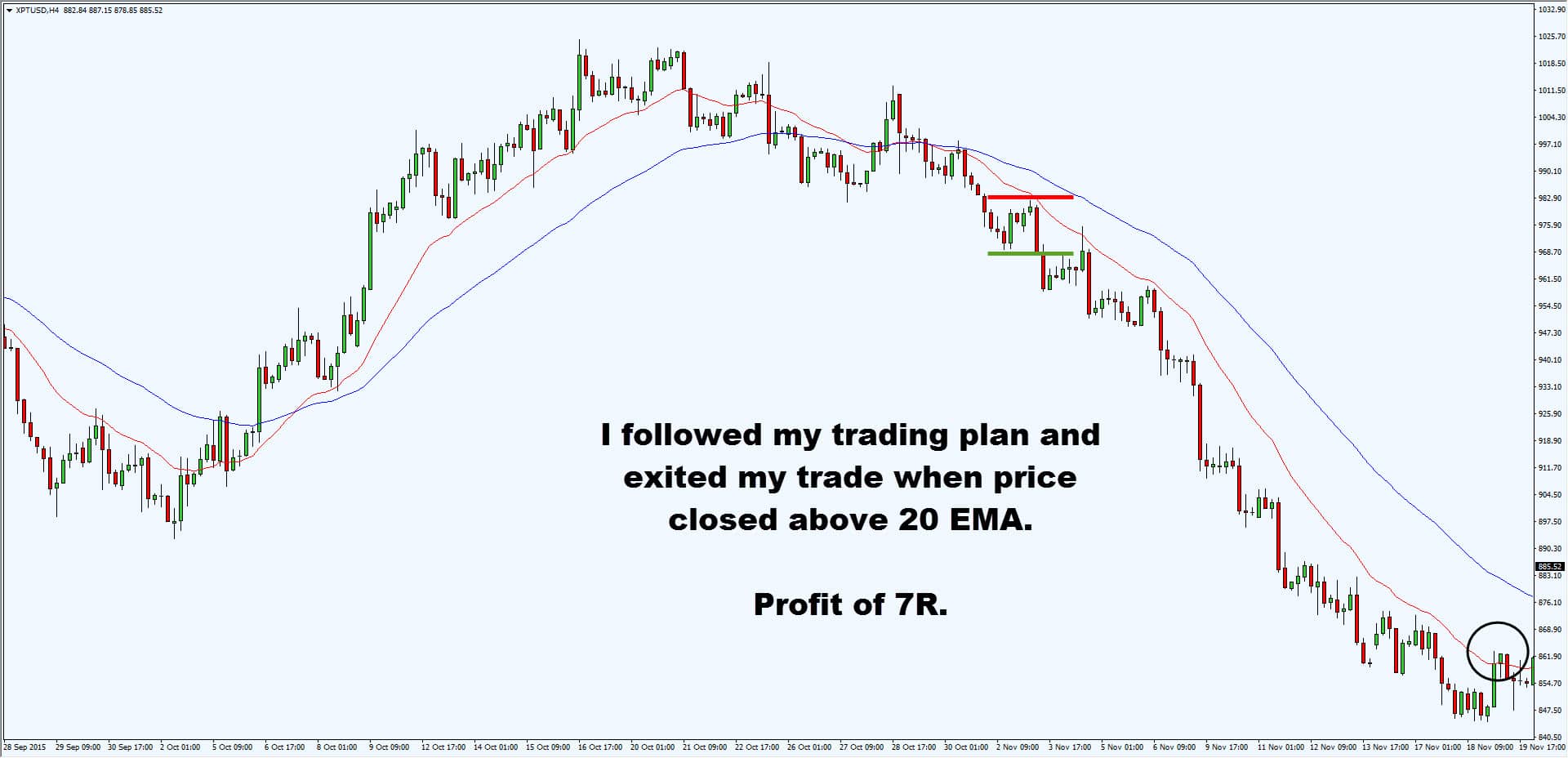
Here’s what I mean:
exit chart
After recording and capturing your charts, you’re now ready to move onto the next section…

Review your trades and find your “edge”

Once you’ve executed 100 trades consistently, you can review whether your trading strategy has an “edge” in the markets.
To do so, you need to use the expectancy formula below:
Expectancy = (Winning % * Average win) – (Losing % * Average loss) – (Commission + Slippage)
If you have a positive expectancy, congratulations! It is likely that your trading strategy has an “edge” in the markets.
But what if it’s a negative expectancy?
Here’s a few things you can look at…
Trade with the trend
By trading with the trend, you’ll trade along the path of least resistance which will improve your performance.
Set a proper stop loss
You want to set your stop loss based on structure of the markets, and not the dollar amount you’re willing to risk.
Remove large losses
You can do this by risking no more than 1% on each trade.

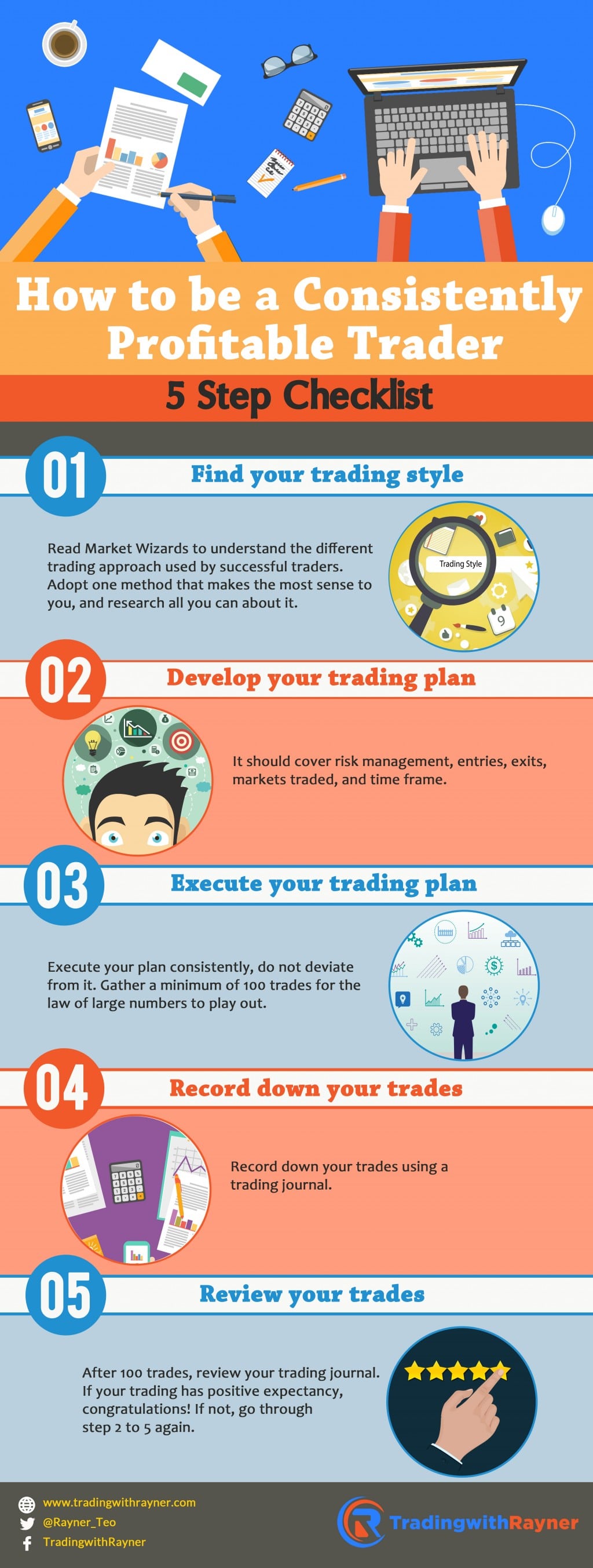
Here’s a summary of what you’ve learnt so far…

Consistently profitable trader checklist

Speed your learning curve by following these traders

Jim Rohn once said, “you are the average of the 5 people you spend the most time with.”
I couldn’t agree more.
So, if you want to improve your trading fast, then hang around with traders who are already doing it, successfully.

Follow these traders on Twitter:

Steve Burns – Trend and swing trader
Tom Dante – Futures trader (ledge)
Rolf – Founder of Tradeciety
Assad Tannous – Head Trader and founder of Asenna Wealth Solutions
Lance Beggs – Price action trader
Peter Brandt – 40 year veteran trader who trades using classical technical analysis
Rayner Teo – The one who wrote the post you’re reading now

Trading websites you must check out:

Newtraderu – Helping new traders survive
Tradeciety – Lots of tips and tricks on trading
YourTradingCoach – One of the best price action website out there
ChatwithTraders – Interviews with successful traders
TradingwithRayner – Trend following by reading price action of the markets

Conclusion

I’ve just shared with you step by step, on how to be a profitable trader within the next 180 days.
I can’t guarantee you’ll be profitable within the next 180 days. But if you follow the steps I’ve shared with you, I’m certain you’ll have a strong trading foundation that, greatly increase the odds of your trading success.
Trading success is the sum of small efforts, repeated day in and day out — R Collier
Check out more of Rayner’s work at TradingWithRayner.com or his great tweet stream @Rayner_Teo.

Friday, April 8, 2016

10 of the Worlds Most Powerful Trading Rules


Trading Habits1. A winning trading system must either be designed to have a large winning percentage of trades or big wins and small losses.
2. Your trading system must be built on quantifiable facts not opinions.
3. Start with the weekly price chart to establish the long term trend, and then work down through the daily and hourly charts to trade in the direction of that trend. The odds are better if you are trading in the direction of the long term trend.
4. The more times a support or resistance level is tested, the greater the odds that it will be broken. Old resistance can become the new support, and the old support may become the new resistance.
5. Moving averages can quantify trends and create signals for entries, exits, and trailing stops.
6. Bull Markets have no long term resistance, and Bear Markets have no long term support.
7. “The larger the market gaps, the greater the odds of continuation and a trend.” – Linda Raschke
8. “The last hour often tells the truth about how strong a trend truly is. “Smart” money shows their hand in the last hour, continuing to mark positions in their favor. As long as a market is having consecutive strong closes, look for an up-trend to continue. The up trend is most likely to end when there is a morning rally first, followed by a weak close.” – Linda Raschkee
9. Above the 200 day is where bulls create uptrends. Bad things happen below the 200 day; downtrends, distribution, bear markets, crashes, and bankruptcies.
10. “It is much easier to watch a few than many.” – Jesse Livermore
These are 10 powerful trading rules from my new book “Trading Habits: 39 of the World’s Most Powerful Stock Market Rules.” The book explains these rules in great detail and how to profit from them along with 29 others.